By Dawood Jarral SEO Expert and Publisher at TrendScoopGlobal, covering finance and digital markets
Quick Summary
India formally joined Pax Silica at the India AI Impact Summit 2026 held at Bharat Mandapam, New Delhi. This is not just another diplomatic handshake. It marks India’s decision to lock arms with the United States and other democratic nations to control who builds, owns, and deploys the world’s most powerful technologies chips, AI, and critical minerals. This article breaks it all down in plain language.
What Is Pax Silica? (And Why Should You Care?)
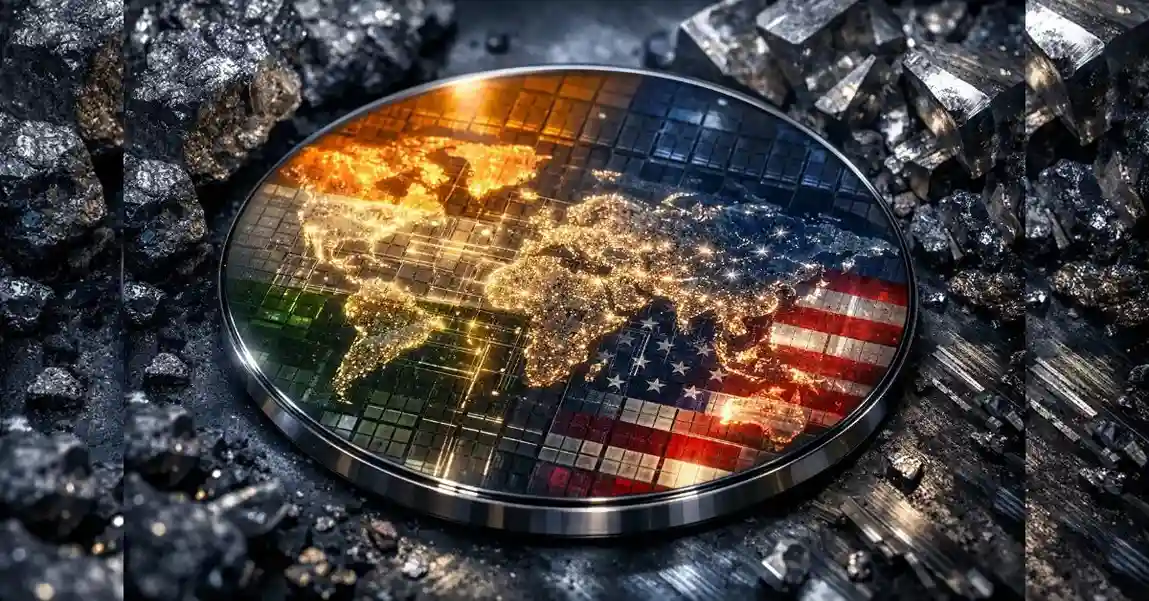
Let’s start with the name. Pax is a Latin word that means peace. Silica refers to silicon the material at the heart of every computer chip, smartphone, and AI server on the planet. Put them together and you get: peace through silicon.
But Pax Silica is not a peace treaty in the traditional sense. It is a strategic coalition launched in late 2025 by the United States. Its goal is simple on paper: make sure that the technologies powering the future semiconductors, artificial intelligence, and the critical minerals needed to build them are controlled by democratic, trustworthy nations. Not by authoritarian states.
Think of it as a new kind of alliance. Instead of armies and borders, this alliance is built around supply chains, chip factories, data centers, and mineral mines.
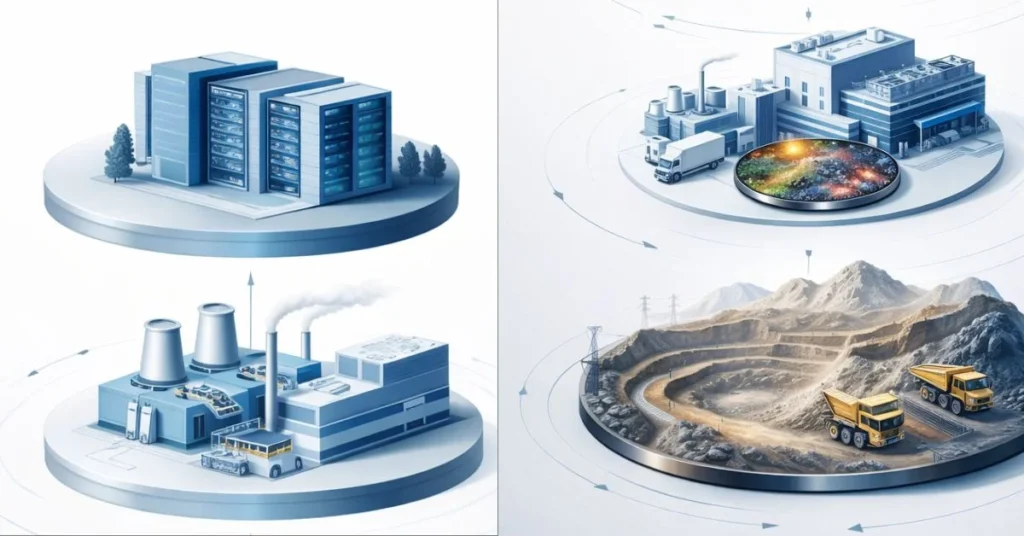
Pax Silica is the coalition that will define the 21st century economic and technological order. It is designed to secure the entire silicon stack from the mines where we extract critical minerals, to the fabs where we manufacture chips, to the data centres where we deploy frontier AI.
Sergio Gor, U.S. Ambassador to India, India AI Impact Summit 2026
India formally joined Pax Silica on the fifth day of the India AI Impact Summit 2026 at Bharat Mandapam, in a signing ceremony that brought together the Minister of Electronics and IT Ashwini Vaishnaw, U.S. Under Secretary of State Jacob Helberg, Ambassador Sergio Gor, Micron CEO Sanjay Mehrotra, and Tata Electronics MD Randhir Thakur.
This was not a routine summit. This was a statement.
The New Iron Curtain Is Made of Silicon
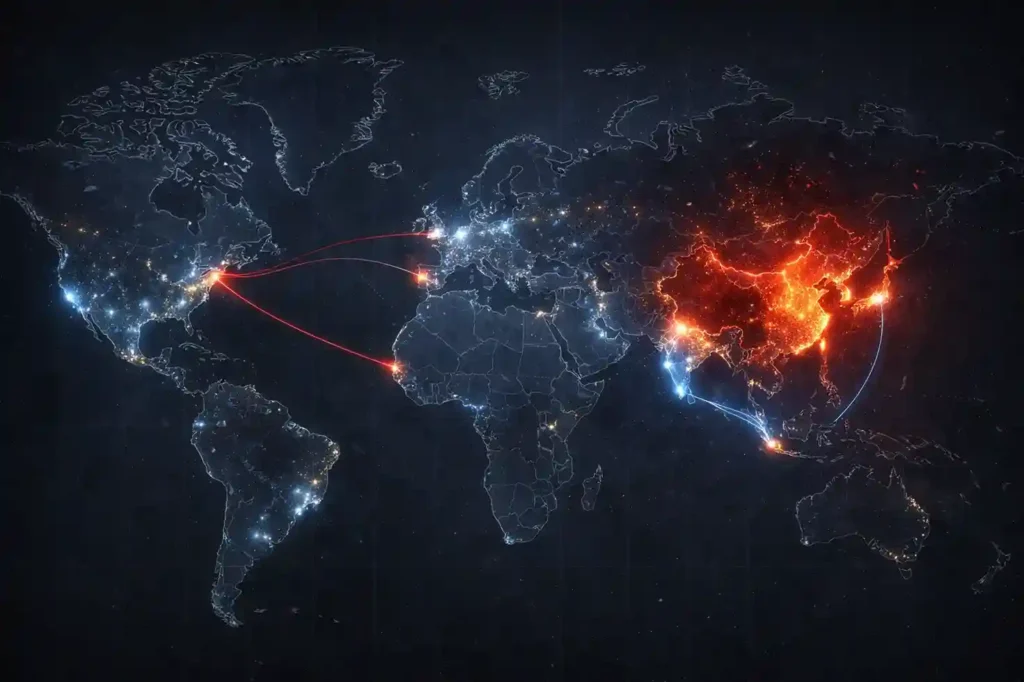
During the Cold War, the world was divided by an ‘Iron Curtain’ a political and military divide between the democratic West and the communist East. Today’s divide is different. It is not about missiles or tanks. It is about who controls the world’s technology supply chain.
China currently processes roughly 85 to 90 percent of the world’s rare earth elements the materials needed to build everything from electric vehicles to missile guidance systems to AI chips. China also dominates magnet manufacturing, the downstream step that makes those minerals useful. If Beijing decides to cut off access to these materials tomorrow, most of the world’s tech production would slow to a crawl within months.
This is what geopolitical experts now call Silicon Stack Security making sure that the full pipeline, from raw minerals in the ground to finished AI systems in data centers, is not controlled by one country that could use it as a weapon.
Ambassador Gor put it bluntly at the summit: “We choose whether innovation happens in Bangalore and Silicon Valley or in surveillance states.” That sentence is the entire thesis of Pax Silica in one line.
This is the shift from Globalization to what analysts now call Friend shoring Semiconductors the idea that you only build critical supply chains with countries you actually trust. Not the cheapest option. The safest option.
Why India? Why Now?
This is the question most articles skip over, and it is the most important one.
India Has What the World Needs
India is now the world’s most populous nation and is on track to become the fourth largest economy by GDP. It has a large English speaking, highly educated engineering workforce. It has its own rare earth reserves. And critically, it is a democracy with a track record of respecting property rights and contracts.
India is also already inside the global tech supply chain in ways most people do not realize. Indian engineers are designing two nanometer chips the most advanced in the world. India’s semiconductor fabrication incentives are attracting global giants. Micron has already set up assembly and testing operations in Gujarat. Tata Electronics is building chip packaging facilities. The foundation is being laid.
The iCET 2.0 Connection
Pax Silica did not come out of nowhere for India. It is the natural evolution of the Initiative on Critical and Emerging Technologies, or iCET, first announced between Prime Minister Modi and President Biden. iCET was about cooperation on semiconductors, AI, space, and defense tech. Pax Silica takes that foundation and turns it into a formal multilateral coalition. Think of it as iCET growing up.
The Modi Biden tech accord laid the diplomatic groundwork. Pax Silica is the structure built on top of it. India’s entry was not a surprise to anyone watching closely it was the logical next step.
India’s Strategic Autonomy Play
Here is something competitors are not covering properly: India joined Pax Silica but chose observer status in Trump’s Board of Peace. This is not a contradiction. It is extremely deliberate strategy.
India chose the tech coalition because it is non-binding and economically grounded. It did not fully join the peace board because that framework involves centralized governance, significant financial commitments, and potential political entanglements. India has always protected its strategic autonomy the ability to make its own decisions without being locked into anyone else’s political agenda.
This is India playing chess, not checkers. Align where it helps the economy and national security. Step back where sovereignty might be compromised.
The Corporate Battle Playing Out at Bharat Mandapam
The India AI Impact Summit 2026 was not just a government event. For the world’s biggest AI companies, it felt more like a high stakes recruitment fair mixed with a land rush. Everyone was trying to plant their flag in India at the same time.
OpenAI Makes Its India Move
OpenAI used the summit to formally launch ‘OpenAI for India’ a dedicated India initiative. More significantly, it secured the Tata Group and TCS as the first anchor tenants for its new HyperVault data centers. This is a massive deal. Tata is one of India’s most powerful and trusted conglomerates. Having them as a partner gives OpenAI instant credibility, distribution reach, and access to enterprise clients across the country.
The HyperVault centers are about more than storage. They are about GPU Sovereign Clouds the idea that a country’s most sensitive AI workloads should run on infrastructure that the country itself can control, rather than depending entirely on servers located in another country.
Anthropic’s Counter Move
Anthropic, OpenAI’s biggest rival, did not sit quietly. It made two moves that immediately got people talking. First, it hired Irina Ghose the former Managing Director of Microsoft India as a key executive. Ghose has decades of enterprise relationships across India’s biggest companies. She is not just a hire; she is a signal that Anthropic is playing a long game in India.
Second, Anthropic announced a major enterprise partnership with Infosys, one of India’s biggest IT services companies with clients across banking, healthcare, and government worldwide. This partnership gives Anthropic a direct channel into global enterprise AI deployment through Infosys’s existing relationships.
The real story here is not which chatbot is smarter. It is about which company can build deeper roots in India’s talent ecosystem and enterprise market first. The AI supply chain resilience race is as much about people as it is about data centers.
What the Corporate Battle Means for You
If you are a professional in India, this competition is good news. Multiple global AI companies are simultaneously trying to hire Indian talent, build Indian infrastructure, and partner with Indian companies. That means more jobs, more investment, and more opportunities for Indian engineers, executives, and enterprises to sit at the global AI table rather than watching from the sidelines.
The Critical Minerals Corridor: The Part No One Is Talking About
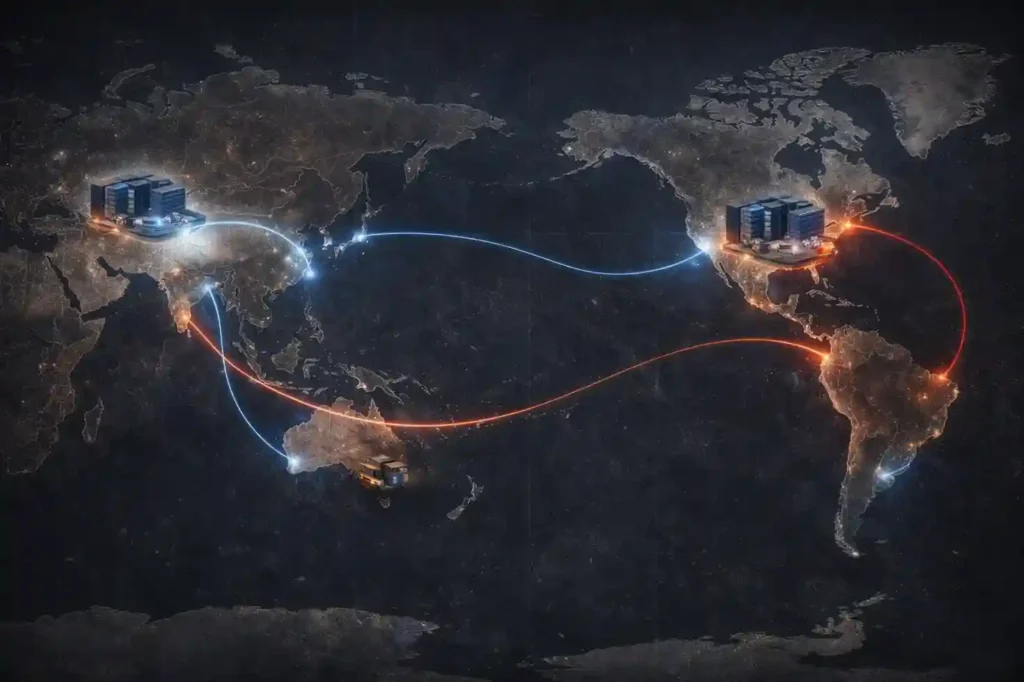
Here is the angle that most coverage of Pax Silica completely misses: the story does not start with chips. It starts underground.
Every semiconductor, every battery, every AI server requires critical minerals lithium, cobalt, neodymium, dysprosium, and dozens of others. These minerals are called ‘critical’ because they are hard to replace and the supply is geographically concentrated. Right now, China controls the processing of most of them.
India has significant domestic rare earth reserves, particularly along its coastal regions. But having reserves in the ground and having a functioning mining to manufacturing pipeline are two very different things. India imports a substantial volume of processed rare earth materials and remains exposed to supply chain disruptions.
India’s National Critical Minerals Mission and its planned rare earth corridors are designed to fix this. The government has announced a scheme worth approximately 7,280 crore rupees to develop integrated permanent magnet capacity domestically. Pax Silica gives India access to Western investment, technology, and market access to make these plans real.
The Critical Minerals Corridor being discussed under Pax Silica is about creating a parallel supply chain a democratic, trustworthy alternative to the China dominated one. Think of it as a highway for minerals that goes from Australia’s mines and India’s deposits to chip factories in the US, Japan, and now India itself.
This is the geopolitical infrastructure project of the decade, and it barely made the headlines at the summit.
India’s MANAV Framework: AI Ethics for the Global South
While Western countries argue about AI safety in terms of futuristic risks, India is focused on something more immediate: how do you make AI actually useful for a billion people with diverse languages, limited internet access, and real, on the ground problems?
India’s answer is the MANAV Vision a framework that stands for Moral, Accountable, National, Accessible, and Valid. It is India’s alternative to the European Union’s AI Act, which is strict, compliance heavy, and designed for economies that already have mature digital infrastructure.
MANAV takes a different approach. It asks: how do you build AI that serves farmers who need help optimizing fertilizer? How do you make AI accessible to a deaf child in a rural school through real time sign language translation? How do you ensure AI is governed by communities, not just corporations?
This is enormously important for the rest of the Global South Africa, Southeast Asia, Latin America nations that are watching India carefully to see if there is a development model for AI that does not require them to simply adopt whatever Silicon Valley or Beijing decides is best for them.
India’s framework positions the country not just as an AI consumer or even an AI producer, but as an AI governance leader for the developing world. That is a role no other country is actively playing right now, and it is an angle that most reporting on Pax Silica completely ignores.
What Pax Silica Actually Commits India To
This is another gap in most coverage: what exactly does India signing Pax Silica mean in practical terms?
Pax Silica is explicitly a non binding coordination framework. India has not agreed to give up any sovereignty. It is not a treaty. There are no automatic military commitments. What it does involve is coordination on export controls (who gets access to advanced chips and AI tools), investment screening (limiting investments from adversarial nations in sensitive tech sectors), and capital flows (directing money toward trusted partners’ tech infrastructure).
Think of it like a trusted supplier club. Members agree to share intelligence about supply chain risks, align their policies on who they sell sensitive tech to, and preferentially invest in each other’s capabilities. The practical benefit for India is access to advanced semiconductor technology, AI infrastructure investment, and being inside the room when the rules of the global tech economy are written.
The risk, if there is one, is that India’s relationship with countries outside the coalition particularly Russia, with whom India maintains significant ties becomes more complicated. But India’s calibrated approach suggests it is aware of this tension and is managing it deliberately.
What This Means for India’s Semiconductor Future
India’s semiconductor ambitions are real but still in early stages. The country has strong design capabilities Indian engineers work at the top of every major chip company’s R&D teams. But India does not yet have significant chip fabrication capacity. The chip manufacturing plants, called fabs, are enormously expensive to build and operate.
Joining Pax Silica opens doors to Semiconductor Fabrication Incentives from the United States and allied governments. It makes India eligible for coordinated investment and technology transfer in a way that would not happen outside this framework. The goal, articulated clearly at the summit, is for India to develop not just chip design capabilities but the full semiconductor value chain from minerals to wafers to finished chips to AI deployment.
Minister Vaishnaw underscored this at the signing, noting that the semiconductor industry will need around one million new skilled professionals and that this is a major opportunity for India’s young population.
The timeline is long building a semiconductor ecosystem takes a decade or more. But the direction is now firmly set.
The Angles Competitors Are Missing
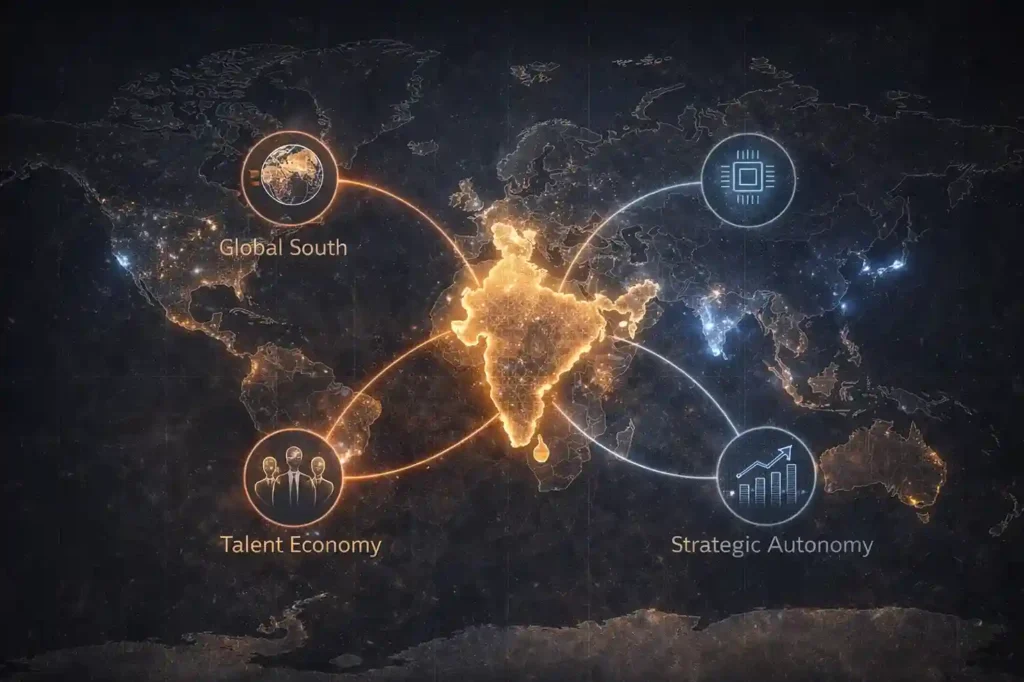
After reading the coverage from Rare Earth Exchanges, NDTV, and the PIB press release, here is what the mainstream narrative is leaving out:
1. The Global South Governance Story
No major outlet is covering Pax Silica through the lens of what it means for other developing nations. India is not just joining a club it is potentially becoming the bridge between the democratic tech bloc and the rest of the Global South. The MANAV framework positions India to export an AI governance philosophy, not just technology services.
2. The Talent Economy Angle
The real competition between OpenAI and Anthropic in India is not about chatbots. It is about who locks in the best Indian engineering talent for the next decade. India produces some of the world’s best AI and semiconductor engineers. Both companies know that the talent war in India will define who wins the global AI race.
3. The Rare Earth Story
Pax Silica starts with minerals, not chips. The critical minerals corridor is the foundation everything else is built on, and it is dramatically under covered. India’s domestic rare earth reserves and its National Critical Minerals Mission are central to the whole Pax Silica architecture, not a footnote.
4. The Strategic Autonomy Calculation
India’s decision to join Pax Silica but stay as observer in the Board of Peace is a textbook example of nonaligned pragmatism for the 21st century. Most coverage treats this as a contradiction. It is actually the strategy. India is aligning on economics and technology while preserving political flexibility. That model call it Sovereign Tech Alignment may become a template for other emerging economies.
5. The Compounding Growth Thesis
Minister Vaishnaw’s reference to compounding growth since 1947 was not just rhetoric. India’s tech sector, manufacturing base, and engineering talent pool have been growing quietly for decades. Pax Silica is the moment when that compounding growth meets global geopolitical demand. The world suddenly needs exactly what India has been building.
The Risks: What Could Go Wrong?
It would not be honest to write this article without acknowledging the risks. Pax Silica is promising, but it is not guaranteed to deliver.
First, building semiconductor and critical mineral supply chains takes enormous capital and time. Incentive schemes can be announced but execution is hard. India has a history of ambitious industrial policies that took longer than expected to show results. The same could happen here.
Second, China is not going to sit still. As India moves deeper into the US tech coalition, Beijing may respond by making it harder for Indian companies to access Chinese supply chains, markets, or manufacturing partners. Many Indian businesses still have significant China exposure.
Third, domestic politics in both India and the United States can shift. A change in government in either country could alter the pace or depth of this cooperation. Pax Silica is non binding specifically because binding agreements are harder to pass politically but that also means they are easier to deprioritize.
Fourth, there is the question of equity. If India’s semiconductor boom primarily benefits a small number of large corporations and elite engineers, and the broader population does not see meaningful economic improvement, the political support for these policies may erode over time.
None of these risks make the Pax Silica story less important. They make it more important to watch carefully.
The Bottom Line
Pax Silica is one of the most significant geopolitical developments of 2026, and most people have never heard of it.
Here is the simple version: the world is splitting into two technology ecosystems. One is controlled by China and its partners. The other is being built by the United States and democratic allies and India has just formally chosen which side it is helping to build.
This choice will shape where semiconductor factories get built, where AI data centers get funded, where critical minerals get processed, and ultimately who has economic leverage in the second half of the 21st century.
For India, it is not just a foreign policy decision. It is a development strategy. Join the club that is building the technology future, and make sure India is not just a customer or a subcontractor, but a co architect of that future.
As Jacob Helberg said at the signing: “Pax Silica is our declaration that the future belongs to those who build.”
India is now officially in the building business.
Key Terms Explained Simply
Silicon Stack Security Protecting the full chain from raw materials to finished AI systems so no single hostile country can cut off your access.
Strategic Tech Decoupling Gradually reducing dependence on China for key technology inputs and building alternatives with trusted partners.
Friend shoring Semiconductors Building chip supply chains only with countries you trust, even if it costs more than using the cheapest global option.
AI Supply Chain Resilience Making sure AI development is not dependent on any single point of failure one country, one supplier, one trade route.
Critical Minerals Corridor A planned supply route for rare earth minerals and other critical materials, connecting mines in friendly nations to factories in other friendly nations.
GPU Sovereign Clouds Data centers owned or controlled by a nation so its most sensitive AI workloads are not running on foreign controlled infrastructure.
Semiconductor Fabrication Incentives Government subsidies and tax benefits designed to attract chip manufacturers to build factories in a specific country.
Sources
Press Information Bureau (PIB), Government of India pib.gov.in (Release ID: 2230648)
Rare Earth Exchanges rareearthexchanges.com
NDTV ndtv.com
U.S. State Department state.gov/pax-silica
FAQ
What is Pax Silica?
A US led coalition launched December 2025 to secure the full “silicon stack” from critical minerals in the ground to AI data centers at the top. Non-binding. Covers chips, AI infrastructure, rare earth minerals, and advanced manufacturing. Designed to reduce the world’s 85–90% dependence on China for rare earth processing.
Is India a member of Pax Silica?
Yes. India officially joined on February 20, 2026 at the India AI Impact Summit 2026, Bharat Mandapam. India is the 10th signatory. It was NOT a founding member (that was December 2025) it was invited in January 2026 after trade tensions eased.
Which countries are in Pax Silica?
10 full members: USA, India, Australia, Greece, Israel, Japan, Qatar, South Korea, Singapore, UAE, UK. Observers (non-signatories): Canada, EU, Netherlands, Taiwan, OECD. More countries expected.
What is the US-led Pax Silica initiative?
The State Department’s flagship AI and supply chain security program, run by Under Secretary Jacob Helberg. Not a military alliance purely an economic security framework. Members get access to US chip tech, coordinated investment, and a seat at the table when global AI rules are written.

𝑻𝒉𝒆 𝑷𝒖𝒍𝒔𝒆 𝒐𝒇 𝑮𝒍𝒐𝒃𝒂𝒍 𝑨𝒇𝒇𝒂𝒊𝒓𝒔
